Helping Children Build the Tools Within Themselves
A 12-book OT-informed curriculum for emotional resilience and learning readiness — designed for the developmental window that determines everything that follows.
YOT Kids is not a workshop or a once-off resource. It is a structured, sequenced curriculum — 4 terms per year, across all four Foundation Phase grades — designed so that every year builds on the last. By Grade 3, children don't just know the tools. They are them.
Grade R · Books 1–4
Laying the foundations
4 story books · one per term Bravery · Self-belief · Growth Mindset · Curiosity
Grade 1 · Books 5–8
Deepening awareness
4 story books · one per term Kindness · Calmness · Confidence · Resilience
Grade 2 · Books 9–12
Integrating the tools
4 story books · one per term Empathy · Focus · Belonging · Transformation
Grade 3 · The Tool Kit
Graduating to ownership
A personalised card-based Tool Kit — children graduate from stories into their own practical tools for life
Filling the gap at the foundation
Social-emotional learning (SEL) programmes in South African schools are designed almost exclusively for Grades 4–7. They assume emotional regulation, self-awareness, and learning confidence are already in place. For many children, they are not — because no one has worked on them at the level where it matters most.
YOT Kids is one of very few programmes operating at the Foundation Phase level — the developmental window where emotional regulation, self-confidence, and readiness to learn are actually formed. We don't supplement later SEL programmes. We build the foundations that make them work.
You cannot teach a child to regulate what they have never learned to feel. Emotional embodiment — understanding emotions in the body, not just the mind — is the foundation every SEL programme builds on. YOT Kids builds that foundation.
If you don't know what it feels like, you can't understand it.
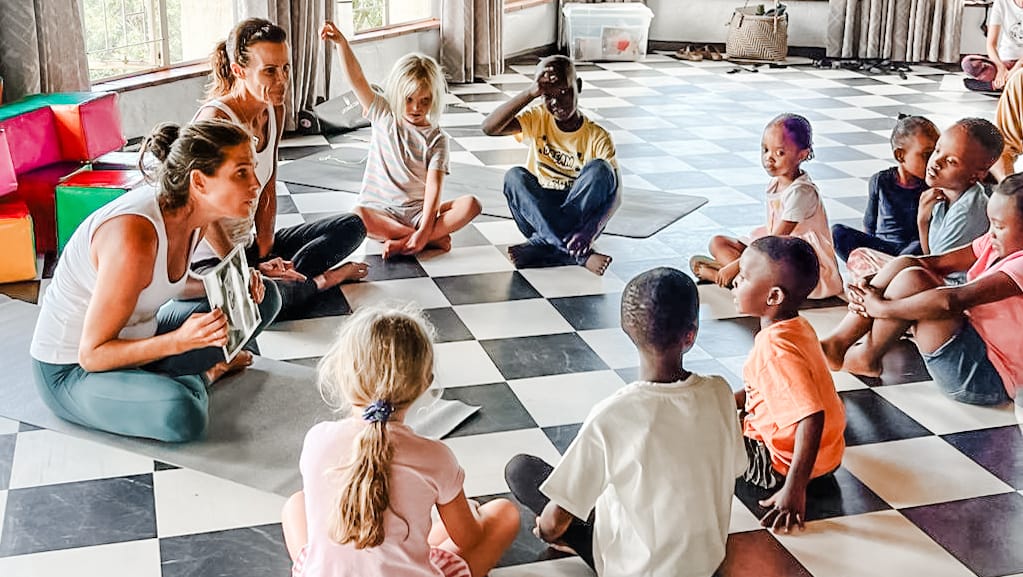
The defining insight behind YOT Kids is embodiment. Emotional intelligence is not an intellectual exercise — it lives in the body. Through mindful movement paired with story, children don't just learn about bravery or calmness or resilience. They feel it. They move it. They own it.
This is why self-regulation — the single most important predictor of learning success and life outcomes — can be taught at ages 5–9. Not through worksheets or talks, but through the body. YOT Kids is built on this truth.
How it works
The Four Pillars of YOT Kids
Each session weaves together four elements — story, movement, emotional awareness, and growth mindset — into a single, integrated learning experience.
📚
Story-Based Learning
Children connect emotionally with animal characters navigating real challenges — learning to recognise their own feelings through the safety of story.
🌿
Movement Integration
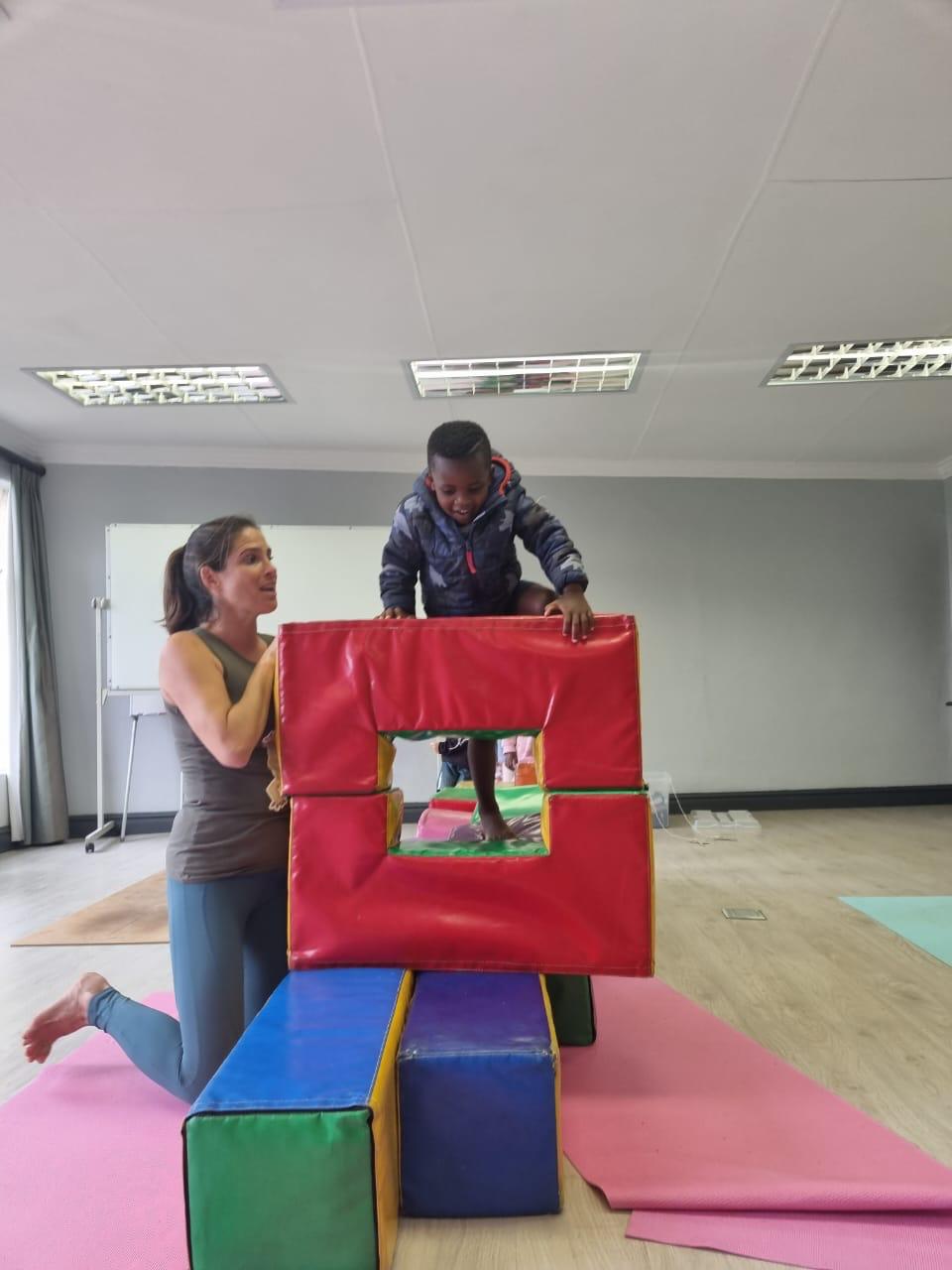
Guided movement supports neurological development, body awareness, posture, breath, and the felt experience of regulation — learning through the body, not just the mind.
💛
Emotional Awareness
Children learn to name, locate, and understand their feelings — building the emotional vocabulary and self-awareness that self-regulation requires.
🌿
Growth Mindset
Every story models perseverance and the belief that challenges are tools for growth — embedding a mindset of resilience before it is ever tested.
The science of the body
Four Somatic Tools, Woven Into Every Term
Each term of the YOT Kids curriculum incorporates one of four evidence-based somatic practices — tools that regulate the nervous system through the body itself.
🌊
Breathing
Slow, rhythmic breathing engages the vagus nerve — shifting the body from a stressed, reactive state into the calm, regulated state where learning becomes possible.
🎵
Humming
Humming generates vibrations that stimulate the vagus nerve directly — reducing cortisol, increasing calm, and helping children move from activation to safety.
🥁
Percussion
Rhythmic drumming and percussive movement provide structured, repetitive sensory input that fosters inner coherence, presence, and a felt sense of safety in the body.
🎶
Song
Collective singing re-establishes connection, attunement, and belonging — experiences that regulation and emotional development depend on, especially in group learning.
Research shows that breathing, humming, singing, and percussion are among the most powerful bottom-up tools available for regulating the nervous system — because trauma and stress are stored in the body as physical sensation, not memory alone. Healing and regulation require working with the body directly. These are not enrichment activities. They are essential tools.
Informed by somatic neuroscience research
Educational impact
What schools experience
🎯
Improved classroom engagement
🤘
Stronger emotional self-regulation
✨
Increased self-confidence
🧠
Better focus and learning readiness
🤝
Healthier social interaction
Ready to bring this to your school?
Partner with YOT Kids
For R25,000, your organisation funds a complete school year of YOT Kids — equipping an entire Foundation Phase with the emotional tools that shape confident, resilient learners.
An Occupational Therapy-informed curriculum designed for the most important — and most overlooked — developmental window in a child's education.
Programme vision
The foundation everything else is built on
Most schools invest in academic readiness. YOT Kids invests in the deeper readiness that makes academic learning possible — emotional regulation, embodied self-awareness, and the inner confidence to face challenge. These are not soft skills. They are the prerequisite skills.
01
Embodied Emotional Learning
Understanding an emotion intellectually is different from knowing it in the body. YOT Kids pairs each story with movement that allows children to physically experience what the character is feeling — bravery in a held pose, calmness in a slow breath, resilience in returning to stillness. This embodiment is what makes the learning lasting.
02
Occupational Therapy Framework
Co-founded by an OT with over 20 years in child development, every element of the programme is grounded in clinical understanding of how children's nervous systems develop, how they process sensory experience, and what they need to access a regulated, ready-to-learn state.
03
A Sustainable, Teacher-Led Model
YOT Kids is delivered by classroom teachers — not external facilitators. This is a deliberate design choice. When tools are embedded in daily classroom life, they become part of how children learn. Teachers are trained, supported, and resourced — creating a sustainable, scalable model that doesn't depend on ongoing external funding to function.
04
The Missing Foundation for SEL
Social-emotional learning programmes for Grades 4–7 exist across South Africa. What has been missing is the foundational curriculum that equips children for those programmes to work. If a child does not know what regulation feels like in their own body, no amount of SEL instruction will create it. YOT Kids builds that felt knowledge first.
“If you don't know what it feels like, you can't understand it.”
This is the founding principle of YOT Kids. Emotional intelligence begins in the body — in the felt sense of calm, the physical experience of courage, the embodied knowledge of what it means to regulate. Children who move through these experiences don't just learn about emotions. They develop a relationship with them. And that relationship is the foundation of self-regulation, empathy, resilience, and confident learning — for life.
A sequenced, term-by-term curriculum spanning the full Foundation Phase. Each year builds on the last — and every child graduates Grade 3 with their own personal Tool Kit.
Grade R · Books 1–4 · Laying the foundations
In Grade R, children meet their first YOT characters. Through four carefully sequenced stories, they begin to discover that emotions have names, that feelings live in the body, and that they already have tools inside them.
Term 1 · Bravery
The Little Gecko
A small gecko learns that fear doesn't have to stop us from moving forward. Children discover their own courage and the physical feeling of bravery in their bodies.
Published
Term 2 · Self-belief
The Little Caterpillar
A caterpillar navigates the discomfort of change and discovers a deep trust in itself — that even in the hardest moments of becoming, everything it needs is already within.
Published
🐻
Cover coming soon
Term 3 · Growth Mindset
The Circus Bear
A bear learning a new skill discovers that “I can't do this yet” is the beginning — not the end. Children embody perseverance and the feeling of trying again.
To be published
🐒
Cover coming soon
Term 4 · Curiosity & Exploration
Jungle Adventures
A curious animal ventures into the unknown and discovers that curiosity — paired with awareness — is one of our greatest tools.
Coming soon
Grade 1 · Books 5–8 · Deepening awareness
Building on Grade R foundations, the Grade 1 curriculum deepens children's emotional vocabulary and body awareness — introducing kindness, calmness, confidence, and resilience.
🐄
Cover coming soon
Term 1 · Kindness & Cooperation
Farmyard Friends
A group of farmyard animals learn that working together and being kind makes every challenge easier. A warm story about community, empathy, and shared effort.
Coming soon
🐠
Cover coming soon
Term 2 · Calmness & Regulation
Underwater Adventures
Beneath the ocean's surface, a young sea creature learns the power of stillness, breath, and calm — a foundational introduction to self-regulation.
Coming soon
🦁
Title to be confirmed
Term 3 · Confidence
Title coming soon
A story exploring the felt experience of confidence — learning to trust ourselves, stand tall, and step forward even when we feel uncertain.
In development
🌿
Title to be confirmed
Term 4 · Resilience
Title coming soon
A story about bouncing back — the embodied experience of falling down, feeling it fully, and choosing to rise again.
In development
Grade 2 · Books 9–12 · Integrating the tools
By Grade 2, children have a rich emotional vocabulary and a body that knows regulation. The Grade 2 curriculum integrates these tools — building empathy, focus, belonging, and transformation as lived experiences.
🐘
Title to be confirmed
Term 1 · Empathy
Title coming soon
Understanding what others feel — and feeling it ourselves. A story about the body-level experience of empathy and connection.
In development
🦉
Title to be confirmed
Term 2 · Focus & Presence
Title coming soon
Learning to bring attention back — to the breath, the body, the moment. A story about presence as a practice children can return to anytime.
In development
🐝
Title to be confirmed
Term 3 · Belonging
Title coming soon
Discovering that we each belong — to ourselves, to each other, to the world. A story about identity, community, and the felt sense of being enough.
In development
🦋
Title to be confirmed
Term 4 · Transformation & Uniqueness
Title coming soon
Completing the Grade 2 journey with a celebration of what makes each child uniquely themselves — and the courage to step fully into that identity.
In development
Grade 3 · The Tool Kit · Graduating to ownership
After three years of story-based learning, Grade 3 children are ready for something different. They no longer need a character to show them the way — they have become the characters.
The graduation year
Your Own Tools — literally.
In Grade 3, every child receives their own YOT Tool Kit — a beautifully designed set of personal cards, reflection prompts, and embodiment practices that belong entirely to them. Not classroom resources. Their own tools — to keep, to use, and to carry forward into everything that comes next.
🃏
My Emotion Cards
A personal deck of illustrated cards — one for each emotional tool built across Grades R–2.
🫚
My Movement Practices
A curated set of their favourite movement and breath practices from three years of learning.
📓
My Reflection Journal
A guided journal where children begin to articulate their inner world and build reflective capacity.
⭐
Junior Mentor Role
Grade 3 children become “Tool Guides” — supporting younger classes and deepening their own learning by teaching it.
“Three years of story have built three years of felt knowledge. The Tool Kit is not the end of the curriculum — it is the beginning of ownership. These children leave Grade 3 not just having learned about emotional tools. They have become children who know themselves.”
For schools & educators
Bringing YOT Kids to Your School
A teacher-led curriculum that builds emotional readiness across the full Foundation Phase — and lays the groundwork for every SEL programme that follows.
Why this matters for your school
The prerequisite programme for all of SEL
Every social-emotional learning programme your school introduces in Grades 4–7 will be more effective if the children in those grades have completed the YOT Kids curriculum. Regulation, emotional vocabulary, and embodied self-awareness are not outcomes of SEL. They are the conditions for it. YOT Kids creates those conditions, systematically, from Grade R.
Classroom benefits
What your school gains
Improved classroom engagement and sustained attention
Healthier peer relationships and social interaction
A Foundation Phase cohort prepared for all future SEL programmes
Teachers equipped with practical, OT-informed support tools
Grade 3 graduates who own their emotional tools independently
Programme Investment
YOT Kids offers two implementation pathways — ensuring the programme can reach both well-resourced and under-resourced schools across South Africa.
R25,000
Per school · per year · full curriculum
Private, Quintile 4 and Quintile 5 schools invest directly. Schools that are able to may also choose to sponsor a developing school — and corporate CSI partners can fund schools in full, qualifying as a recognised CSI initiative.
Pilot Programme
YOT Kids is in active pilot phase in South African schools. We welcome enquiries from schools wanting to join the next cohort. Pilot schools receive full support and direct access to the YOT Kids team.
The most important design decision in YOT Kids is that it is delivered by classroom teachers — not external facilitators. This is what makes it sustainable, scalable, and genuinely embedded.
📚
Full Resource Pack
Books, lesson guides, movement cards, and classroom materials — everything educators need to deliver the curriculum confidently from day one, without specialist support.
🎓
Teacher Training
An introductory workshop builds the knowledge, confidence, and practical skills teachers need. Once trained, educators are fully equipped to deliver the curriculum with confidence — with ongoing programme support and resources available as their practice develops.
🌿
Scalable by Design
Because delivery is educator-led rather than specialist-dependent, the YOT Kids curriculum can be implemented across a wide range of school contexts — making equitable access to quality emotional education genuinely achievable at scale.
Corporate social investment
Fund a school. Change a generation.
For R25,000 per year, your company funds the complete YOT Kids curriculum in a developing school — giving every Foundation Phase learner the emotional foundations they need to thrive.
Fund emotional foundations for children who need them most — and meet your corporate social responsibility commitments in a way that creates lasting, measurable change.
The case for investing here
Where your funding creates permanent change
The emotional regulation, self-awareness, and resilience children build in Foundation Phase become the foundation of everything: their learning, their relationships, their futures. The tools we give children in these early years shape not just how they learn, but how they face every challenge that follows.
Research makes the case clearly: schools are where the cycle of trauma can be broken. But only if children are given the tools to regulate, to feel safe, and to know themselves.
YOT Kids gives schools exactly those tools — embedded in the classroom, delivered by teachers, and designed to reach children who would otherwise never have access to this kind of developmental support.
Your investment doesn't fund an event or a visit. It funds a complete four-year curriculum that becomes part of how a school operates — permanently.
“In today's world your zip code, even more than your genetic code, determines whether you will lead a safe and healthy life. Poverty, unemployment, inferior schools, social isolation, and substandard housing all are breeding grounds for trauma. Trauma breeds further trauma; hurt people hurt other people.”
— Dr. Bessel van der Kolk, The Body Keeps the Score
What we are
A registered Non-Profit Company
YOT Kids is a South African Non-Profit Company (NPC) — a formal legal entity registered under the Companies Act and governed by the CIPC. All income and assets are used exclusively to advance our public benefit mission. No profit is distributed to founders or directors.
For your CSI or corporate responsibility team, funding a registered NPC is straightforward to motivate, allocate, and report on internally.
Our registration
YOT Kids Foundation is a registered Non-Profit Company in the Republic of South Africa.
YOT KIDS FOUNDATION — Reg. No. 2026/295828/08
How it works
Simple to fund. Easy to report.
The process of funding a YOT Kids school is designed to be as straightforward as possible for your organisation.
1
Contact us
Reach out via the contact form or email. We'll send you our full CSI brief and impact documentation.
2
Choose a school
We can match you with a developing school in need, or you may nominate a school of your choice.
3
Transfer funding
A single annual investment of R25,000 funds the complete YOT Kids curriculum for that school for the full year.
4
Receive documentation
We issue a formal donation certificate and impact report — everything your organisation needs for internal reporting and compliance.
What your organisation receives
Recognition & reporting you can use
Beyond the impact itself, YOT Kids provides corporate sponsors with the documentation and recognition needed to fulfil and report on your social responsibility commitments.
📜
Official donation certificate from a registered NPC, suitable for CSI and compliance reporting
📊
Annual impact report detailing programme delivery, school reach, and learner outcomes
🏭
Named school sponsorship — your organisation is credited as the funder of a specific school's programme
📷
Photo and story content from your sponsored school for internal communications and social media
🤝
Direct engagement with the YOT Kids team — available for presentations, site visits, and stakeholder briefings
🌎
SDG alignment — reportable against UN Sustainable Development Goals 3 (Good Health) and 4 (Quality Education)
The investment
R25,000
per school · per year · full curriculum
One investment. Four grades. Every Foundation Phase child in that school equipped with the emotional tools that will shape their learning — and their lives.
Your funding covers
12 illustrated books · Teacher training · Full resource pack · Ongoing programme support · Impact reporting
YOT Kids was born from a friendship, a shared conviction, and over four decades of combined experience working with children, movement, and healing.
Rachel Carey
Occupational Therapist & Co-founder
20+ years in child development & learning readiness
Rachel is a registered Occupational Therapist specialising in child development, emotional regulation, and learning readiness. With over two decades of clinical practice, she brings deep expertise in how children's bodies and nervous systems develop — and what they need to access a truly ready-to-learn state.
She is the author of the YOT Kids book series and the clinical architect of the programme's OT-informed framework. Rachel's work is grounded in the conviction that emotional readiness is not a luxury — it is the prerequisite for everything else education tries to achieve.
Helen Weaver
Movement Educator, Mentor & Co-founder
25+ years in mind-body practice & personal development
Helen is a movement educator, mentor, and six-time South African Freediving Champion with over 25 years of experience in mind-body practices and personal development. She brings to YOT Kids a profound understanding of how the body holds and processes emotional experience — and how movement can be one of our most powerful teachers.
Helen leads the movement integration component of the programme — shaping the embodied practices that anchor each story and allow children to feel, not just understand, the tools they are building.
A unique collaboration
Together, Rachel and Helen bring a rare combination of therapeutic expertise, movement education, and storytelling that supports the whole child — mind, body, and emotional world. Their partnership is built on friendship, shared values, and the deep conviction that every child deserves access to the tools they need to flourish.
🎨
Rebekah Kendal
Illustrator · YOT Kids Book Series
The watercolour illustrations that bring the YOT Kids characters to life are the work of South African artist Rebekah Kendal.
Rebekah's distinctive watercolour style — botanically rich, warm, and full of gentle movement — was chosen because it mirrors the ethos of the programme itself: natural, grounded, and quietly alive. Her illustrations do more than depict the characters — they create an emotional atmosphere that children feel before they have read a single word.
The visual world of YOT Kids is inseparable from Rebekah's artistic sensibility. Her contribution is at the heart of what makes these books work as emotional learning tools — beautiful enough to linger in, gentle enough to feel safe.
Get in touch
Let's Start a Conversation
Whether you're a school, an educator, a funder, or simply curious — we'd love to hear from you.
We'd love to connect
YOT Kids is welcoming enquiries from schools, corporate CSI partners, and education organisations who share our vision for South Africa's children.
We are also open to media enquiries, speaking opportunities, and collaboration with aligned organisations.
✉hello@yotkids.com
📍South Africa
Funding a school
A CSI investment of R25,000 funds a complete school year. Select “CSI / Funding enquiry” below and we will send you our full investor brief.
Research & reflections
Insights
Research, perspectives, and reflections from the world of early childhood development, emotional learning, and the science behind what children need to thrive.
Programme update · May 2026
Bringing Stories to Life: The YOT Kids Journey in the Drakensberg
What began with a single story in 2020 has become something deeply meaningful and sustainable — a five-year relationship with schools and communities in the Drakensberg.
Where it began
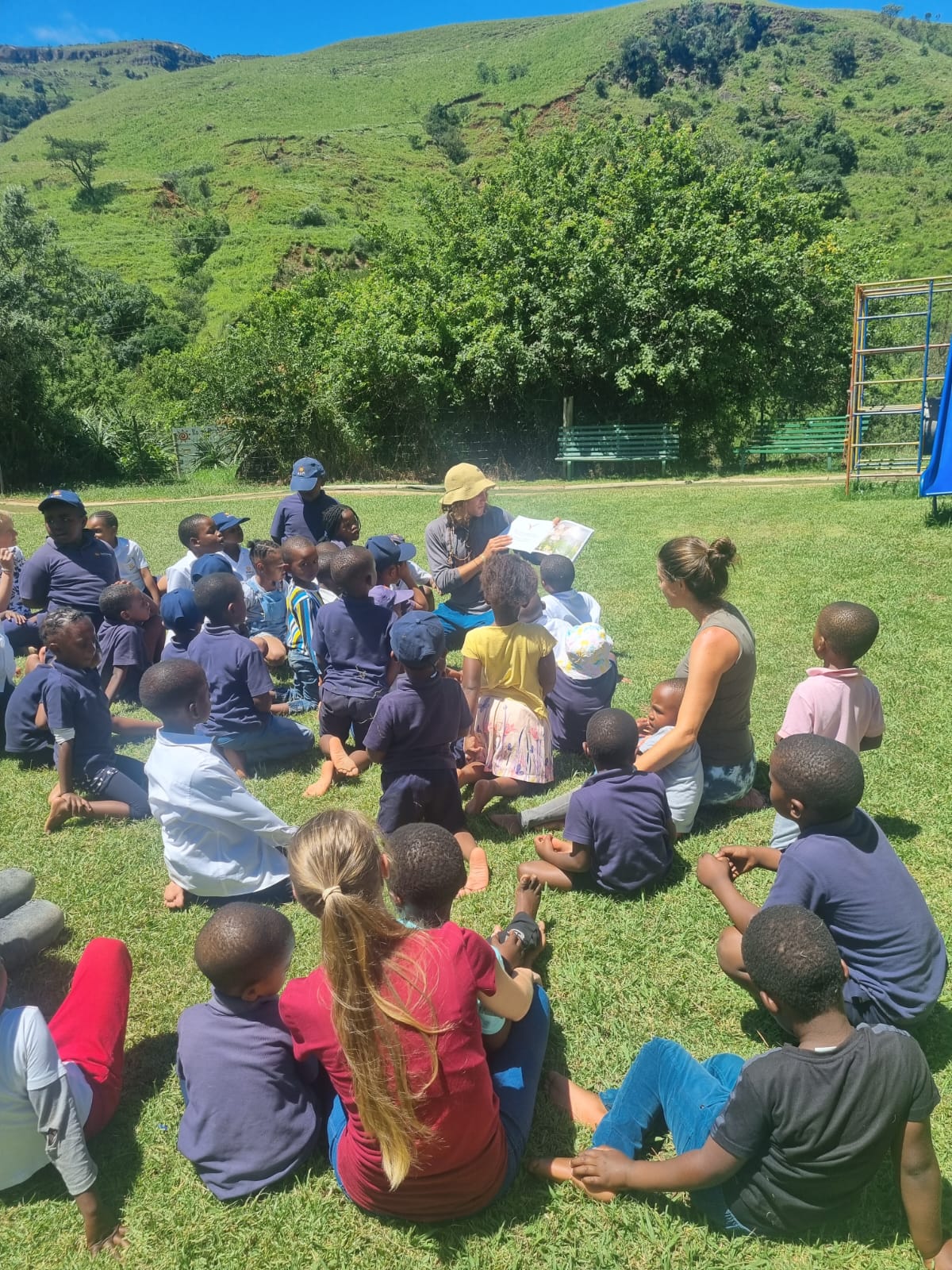
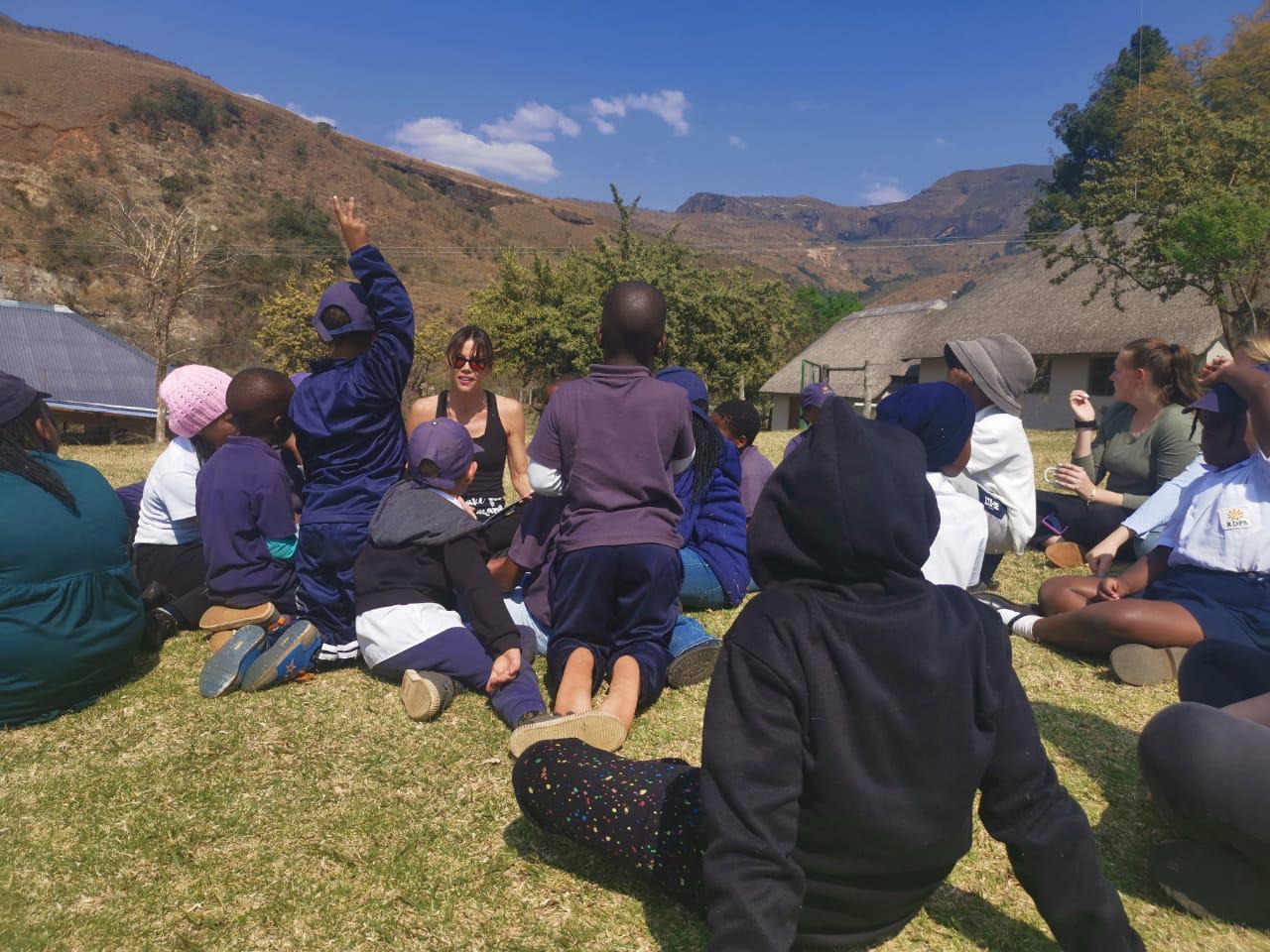
In 2020, through our partnership with Khanyisela Projects, YOT Kids Foundation began a journey in the Drakensberg that would grow into something deeply meaningful and sustainable. What started with a single story — The Little Gecko — has become an ongoing, embedded programme supporting children, teachers, and early learning environments across both Royal Drakensberg Preparatory School and surrounding ECD centres.
Our work started with training teachers in the developmental foundations that underpin the YOT Kids programme. We focused on the why — why movement and mindfulness matter, how they support regulation, and how foundational motor and sensory development directly impacts a child's ability to learn.
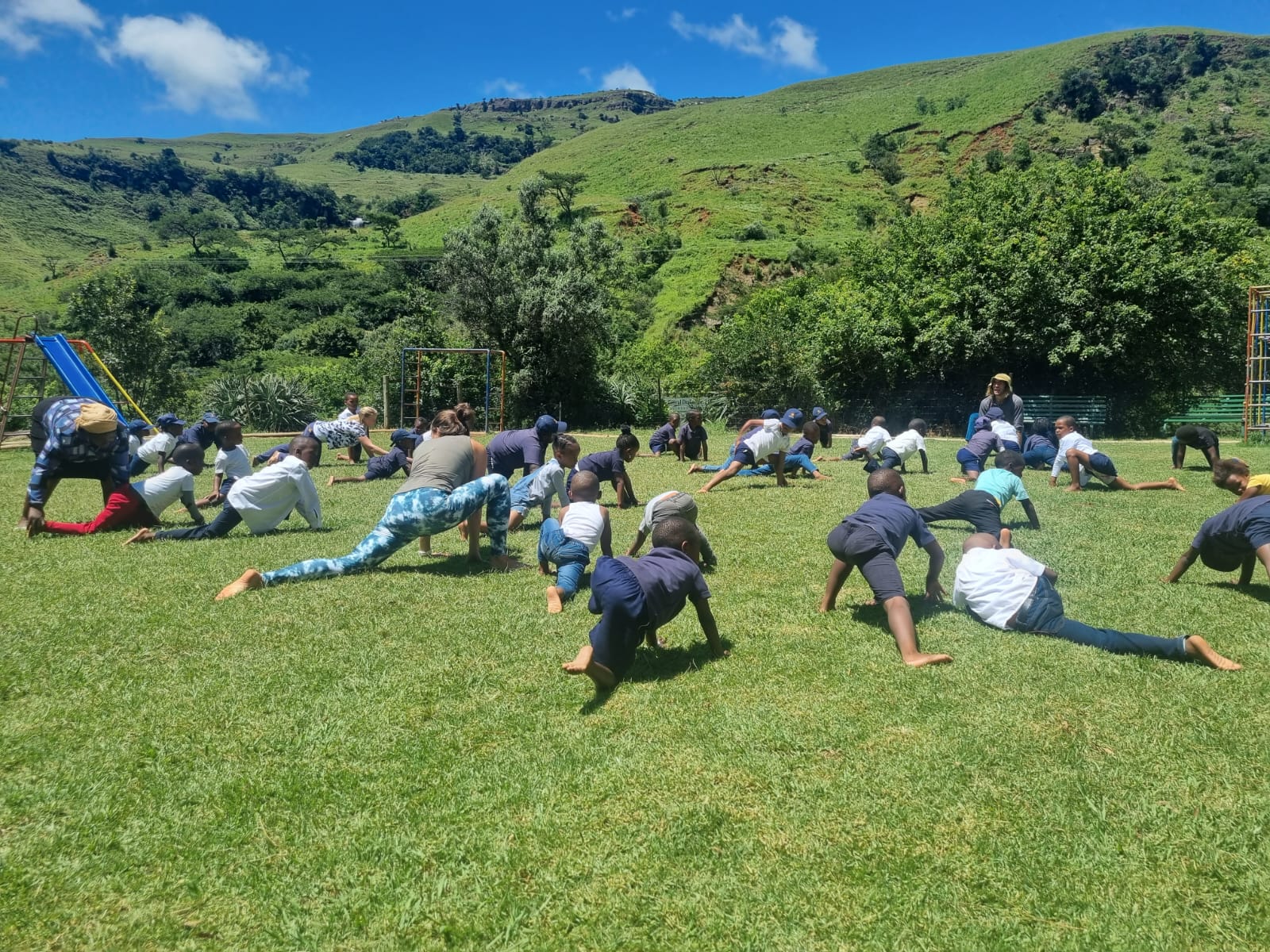
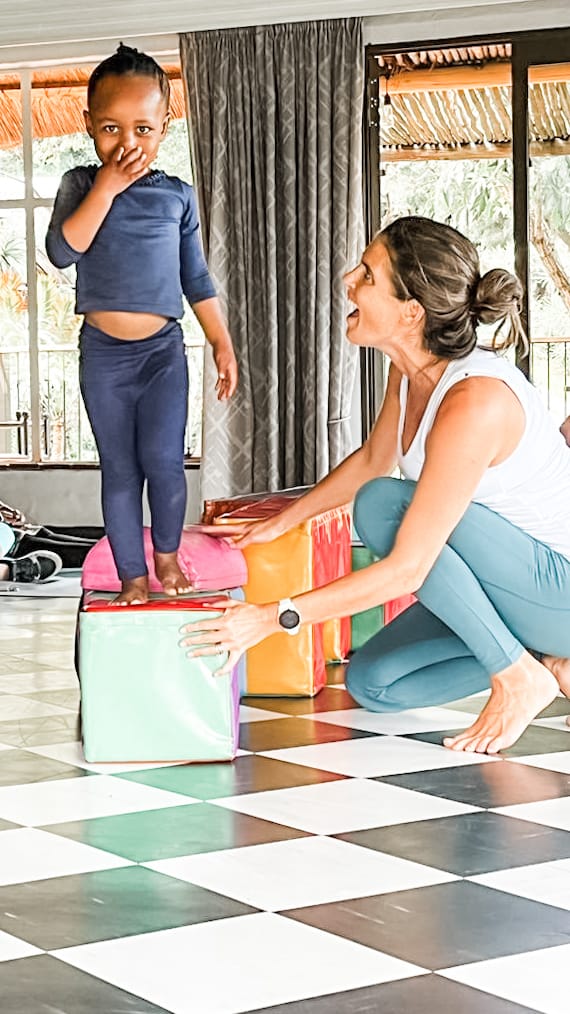
The training combined both theoretical and practical components. Teachers didn't just listen — they experienced. Through playful, embodied exploration of the story's movements and characters, they began to connect with the programme in a way that was both meaningful and memorable. There was laughter, curiosity, and a real sense of engagement as teachers stepped into the world of The Little Gecko — a story centred on bravery — themselves.
Bringing the programme to life
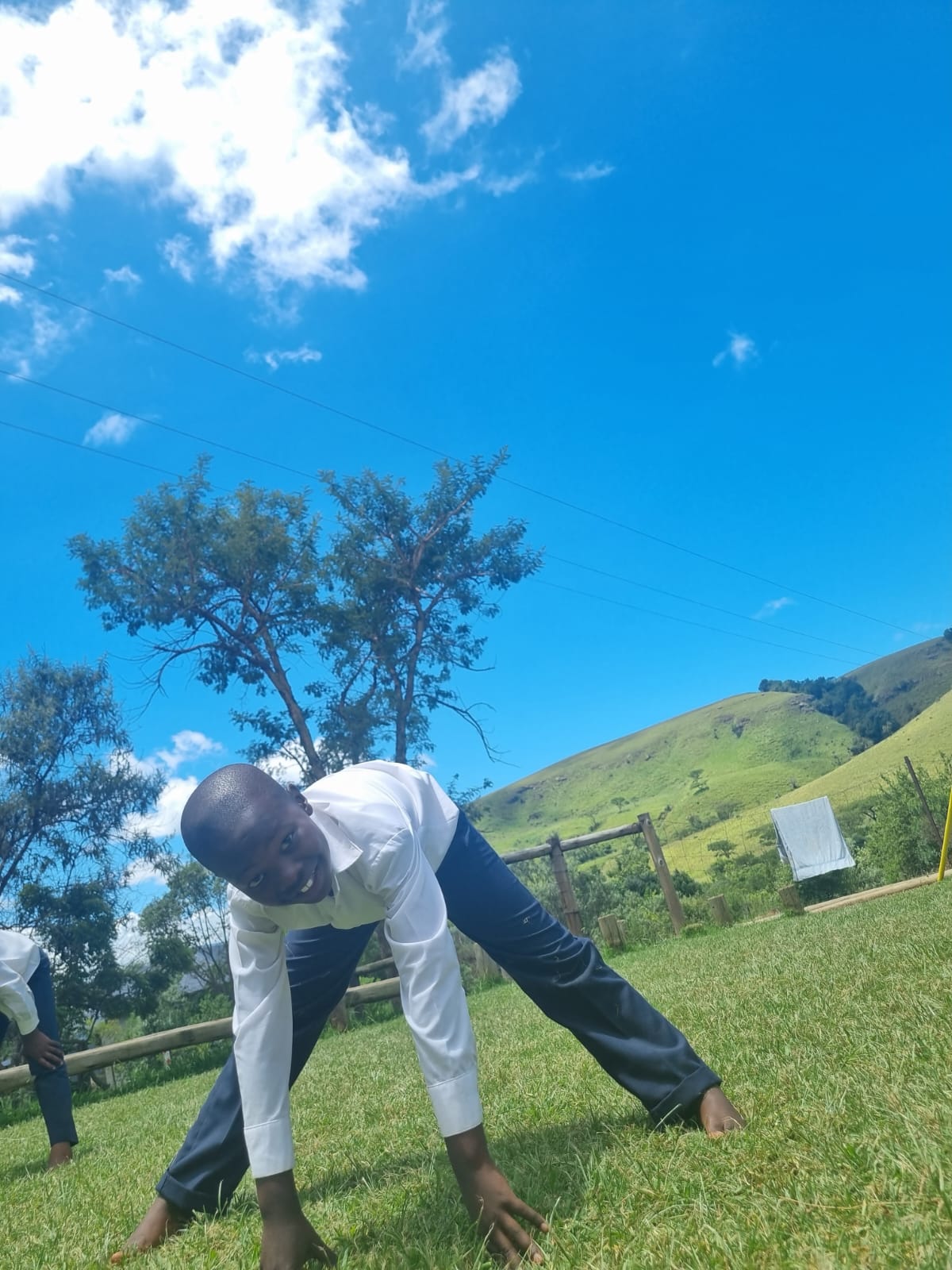
We were then fortunate to introduce the story, movements, and affirmations directly to the children at Royal Drakensberg Preparatory School. This was a powerful moment for us — seeing the programme come alive in the way it was intended: through joyful movement, imagination, and connection.
From there, the programme began to expand. The Little Gecko was translated into isiZulu, allowing us to share it more meaningfully with surrounding Early Childhood Development (ECD) centres. We returned to the Drakensberg to work with ECD teachers, once again grounding the training in both developmental understanding and embodied experience.
Building sustainability
A key part of our approach has always been sustainability. To support this, we identified a “champion” within both the school and the ECD centres — someone who could guide the initial implementation and support teachers as they began to integrate the programme into their daily routines.
We continued to work closely with these champions, supporting them through the practical challenges that naturally arise when embedding something new. Using a problem-based learning approach, we collaborated to find solutions that were relevant and realistic within each school context.
Growing the programme
The response from both teachers and schools was overwhelmingly positive. As the programme became embedded, we began to see not only engagement from learners, but also a growing sense of confidence and ownership from educators.
This led to an exciting next step. In 2021, we returned to introduce a second story — The Little Caterpillar, a story focused on self-belief. Once again, teachers were trained, the programme was experienced, and the work deepened.
Now, five years later, the programme continues to be used consistently within the school environment. The feedback remains strongly positive, with teachers valuing the way it supports regulation, engagement, and classroom participation.
Looking ahead
What has been particularly encouraging is the school's desire to continue growing the programme. There is a shared vision of working towards one story per term — creating a rhythm of ongoing development and support for both learners and teachers.
Later this year, we will return once again to introduce our third story, Circus Bear, which centres on growth mindset. This next chapter represents not just expansion, but continuity — a deepening of a programme that has already taken root.
“What began in 2020 as a single training has evolved into something far more meaningful: a sustained, relationship-based programme that lives within the daily rhythm of classrooms. At its heart, this work is about connection — helping children connect to their bodies, their emotions, and their capacity to learn.”
We are deeply grateful to Khanyisela Projects, the teachers, and the schools who have partnered with us on this journey — and we look forward to what lies ahead.
Every contribution helps us bring the YOT Kids curriculum to children who need it most — building the emotional foundations that shape confident, resilient futures.
Why your support matters
Small contributions. Lasting foundations.
YOT Kids is a registered Non-Profit Company. Every rand and dollar we raise goes directly into putting this curriculum into the hands of children and teachers who would not otherwise have access to it.
There is no minimum. There is no maximum. Every contribution — individual or corporate — moves this programme forward.
For corporate CSI investment and formal donation certificates, visit our CSI Partners page.
🌿
What your support funds
📚
Illustrated books and classroom materials for under-resourced schools
🎓
Teacher training so the curriculum lives in the school permanently
🌿
Programme development — new books, resources, and the Grade 3 Tool Kit
⭐
R25,000 funds one school for an entire year
Make a contribution
Choose how you'd like to give
We have giving options for both South African and international supporters. Campaigns launching soon.
🇺🇪
South Africa
via BackaBuddy
Support us in rands through BackaBuddy — South Africa's trusted crowdfunding platform for non-profits and social causes.
Campaign launching soon
We'll share the link here and on our social media the moment it's live.
🌐
International
via GoFundMe
Support us in your local currency through GoFundMe — available worldwide for friends, family, and supporters everywhere.
Campaign launching soon
We'll share the link here and on our social media the moment it's live.
Want to be notified when we launch?
Send us a message and we'll let you know the moment our giving campaigns go live — and keep you updated on the programme's progress.